
- ホーム
- 【English】Human Stem Cell Culture Supernatant (Exosome-Enriched) Therapy
【English】Human Stem Cell Culture Supernatant (Exosome-Enriched) Therapy
What Is Stem Cell Conditioned Media (Exosome-Containing Solution)?
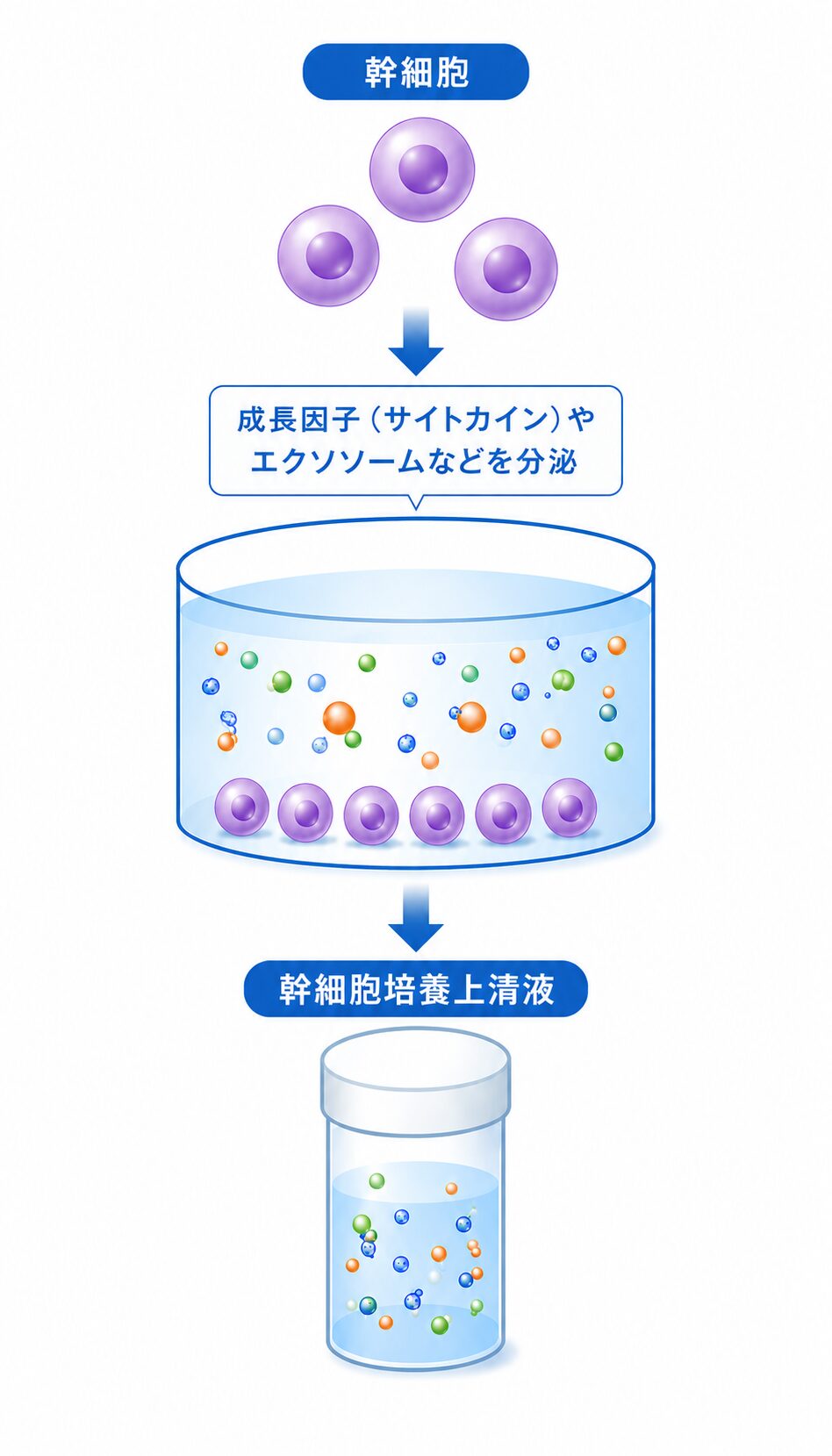
Put simply, this is not “the stem cells themselves” but rather “the substances secreted by stem cells.” While mesenchymal stem cells are being cultured, they release a variety of cytokines (intercellular signaling molecules), growth factors, and extremely small extracellular vesicles called exosomes into the surrounding culture medium. The liquid left after the cells themselves are removed from this culture medium is the “conditioned medium (CM).”
What are exosomes?
Conditioned media contain cytokines, growth factors, exosomes, and other components, but exosomes – a particularly distinctive type of microscopic vesicle – are often used as the basis for naming this therapy. In other words, “conditioned media therapy” and “exosome therapy” are essentially synonymous.
What is conditioned media therapy (cell-free therapy)?
Recent research has revealed that most of the therapeutic effect of mesenchymal stem cells comes not from the cells themselves replacing tissue, but from “signal transmission” via these secreted substances (cytokines, exosomes). This led to the idea that therapeutic effects might be achievable by extracting and using only these signaling molecules – giving rise to the concept of conditioned media therapy (cell-free therapy).
We carefully select highly reliable manufacturers and thoroughly verify the specifications, concentration, and safety testing of each component before offering safe and effective stem cell conditioned media therapy using three lines: adipose-derived, umbilical cord-derived (Wharton’s Jelly), and dental pulp-derived, tailored to your treatment goals.
▶For those considering conditioned media / exosome therapy
The Various Growth Factors Contained in Stem Cell Conditioned Media (Exosome-Containing Solution)
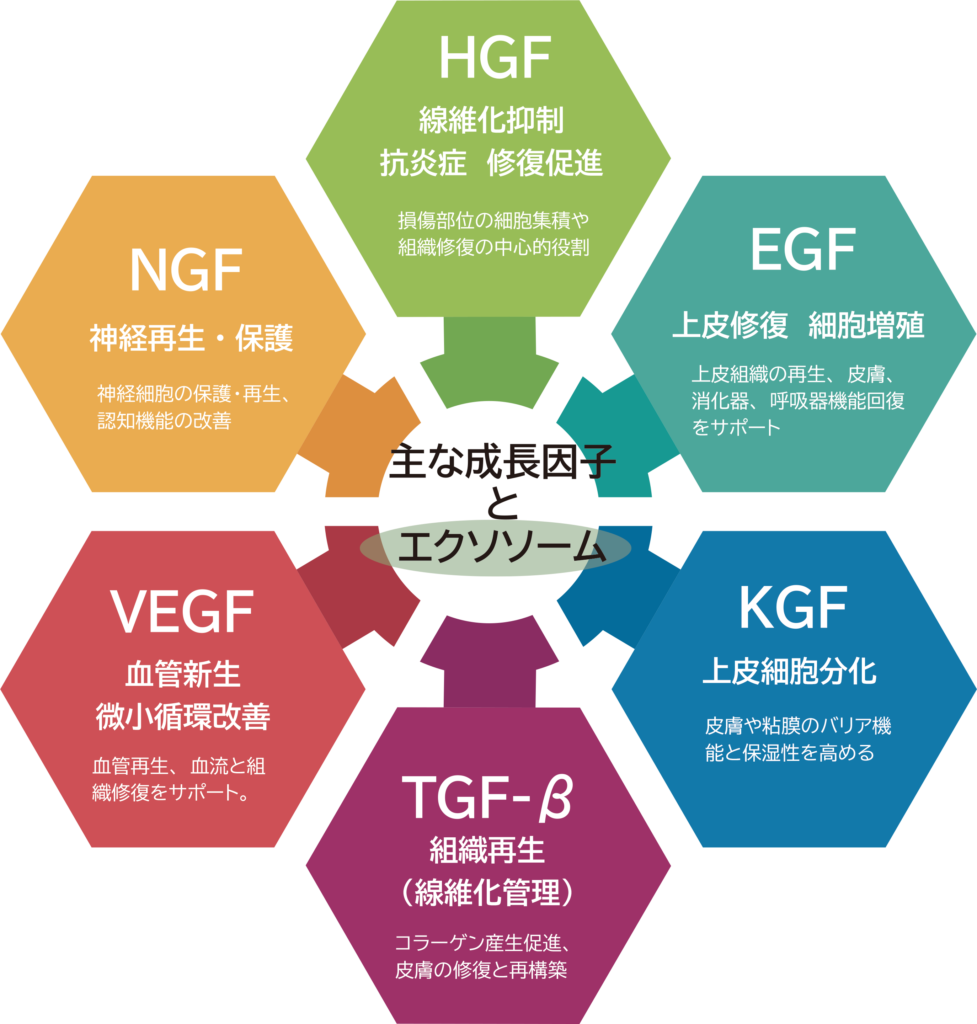
- HGF (Hepatocyte Growth Factor): anti-fibrotic, anti-inflammatory, repair-promoting
Details
HGF promotes cell migration and survival, playing a central role in cell accumulation at damaged sites and tissue repair. It also has anti-fibrotic effects and is broadly involved in the regenerative process following organ damage to the liver, lungs, kidneys, and other organs. - NGF (Nerve Growth Factor): nerve regeneration and neuroprotection
Details
NGF suppresses cell death at the time of injury and contributes to nerve cell growth, maintenance, and regeneration through axonal elongation and neurite formation after injury. Some reports suggest it may help improve cognitive function. - VEGF (Vascular Endothelial Growth Factor): angiogenesis and improved microcirculation
Details
VEGF promotes the proliferation of vascular endothelial cells and angiogenesis, improving blood supply to tissue. It normalizes oxygen and nutrient supply and hypoxia at wound sites, supporting the tissue repair process. - EGF (Epidermal Growth Factor): epithelial repair and cell proliferation
Details
EGF promotes the proliferation and migration of epithelial progenitor cells, supporting functional recovery of a wide range of epithelial tissues including skin, digestive, and respiratory systems. - KGF/FGF-7 (Keratinocyte Growth Factor): induces epithelial cell differentiation
Details
KGF acts selectively on keratinocytes, promoting proliferation and differentiation, and contributes to skin/mucosal barrier function, moisture retention, and epithelial stability. - TGF-α (Transforming Growth Factor): tissue regeneration (fibrosis management)
Details
TGF-α acts on dermal fibroblasts, promoting the production of structural components such as collagen and elastin, contributing to tissue structure stabilization and reconstruction during the repair process. - Exosomes: extracellular vesicles that contain growth factors and other substances, involved in intercellular communication and tissue regeneration.
A Somewhat Technical Explanation
What Are Growth Factors / Cytokines?
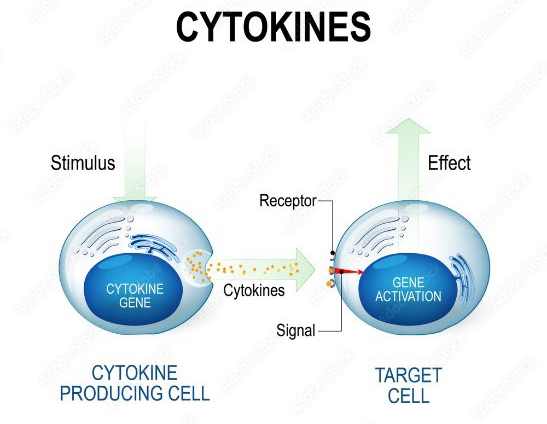
Growth factors and cytokines are signaling molecules that regulate cellular activity, triggering a wide range of physiological responses in the body by controlling gene transcription within the cell nucleus. Growth factors in particular are involved in a broad range of physiological processes in the adult body, including cell proliferation and differentiation, apoptosis, immune regulation, hematopoiesis, angiogenesis, metabolism, wound healing, and maintenance of tissue homeostasis. These signals are released when the cells secreting the growth factor or cytokine receive some form of stimulus, and they exert their function once transmitted to target cells.
What Are Exosomes?
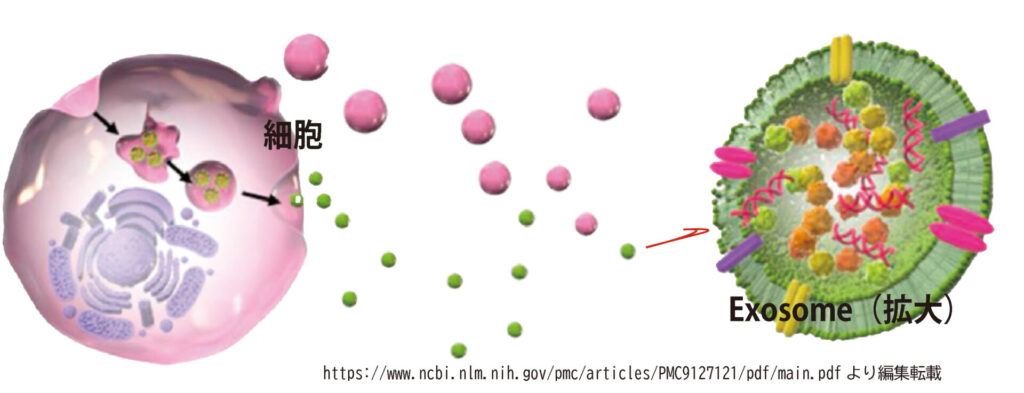
Exosomes are extracellular vesicles (EVs) secreted by cells that mainly contain growth factors and intercellular signaling substances that promote tissue regeneration. Exosomes play an important role in cell-to-cell communication and are expected to have applications across a wide range of diseases. In the field of regenerative medicine, exosomes derived from mesenchymal stem cells (MSCs) have attracted particular attention. They exhibit a variety of therapeutic effects, including anti-inflammatory action, anti-fibrotic action, promotion of angiogenesis, and promotion of tissue repair, and are expected to serve as a form of “cell-free therapy.” For example, in myocardial infarction models, MSC-derived exosomes have been shown to suppress cardiomyocyte apoptosis (cell death), promote angiogenesis, and reduce inflammation. Protective and regenerative effects on tissue have also been demonstrated in various disease models including renal failure, pulmonary fibrosis, and arthritis. These effects are thought to be exerted through miRNAs and proteins contained within exosomes, which regulate gene expression in target cells; going forward, exosomes are expected to find applications as a complement to, or alternative for, cell therapy.
Late-Phase Clinical Trials of Exosome Administration in Humans [Adipose-Derived]
Below is a selection of clinical trials in which exosomes and related substances have been administered to humans. Exosome therapy for the improvement of various inflammatory conditions and diseases is expected to continue developing going forward. At the same time, the level of scientific evidence cannot yet be described as fully established. While many medical institutions already offer exosome-based treatments, current clinical application should be approached carefully and with the utmost caution. (Phase 2/3)
• Efficacy and Safety of EXOSOME-MSC Therapy to Reduce Hyper-inflammation In Moderate COVID-19 Patients
• Effect of Microvesicles and Exosomes Therapy on β-cell Mass in Type I Diabetes Mellitus (T1DM)
• The Effect of Stem Cells and Stem Cell Exosomes on Visual Functions in Patients With Retinitis Pigmentosa
• Use of Autologous Plasma Rich in Platelets and Extracellular Vesicles in the Surgical Treatment of Chronic Middle Ear Infections
(Phase 3)
• Extracellular Vesicle Treatment for Acute Respiratory Distress Syndrome (ARDS) (EXTINGUISH ARDS)
Our Commitment
- Carefully Selected Human Stem Cell Conditioned Media (Exosome-Containing Solution)
All components are derived from human sources. Only donor cells that have passed an eligibility review – including infectious disease testing (hepatitis B, hepatitis C, HIV, syphilis, etc.) – are used. Donor information is recorded and managed. - Ensuring Safety
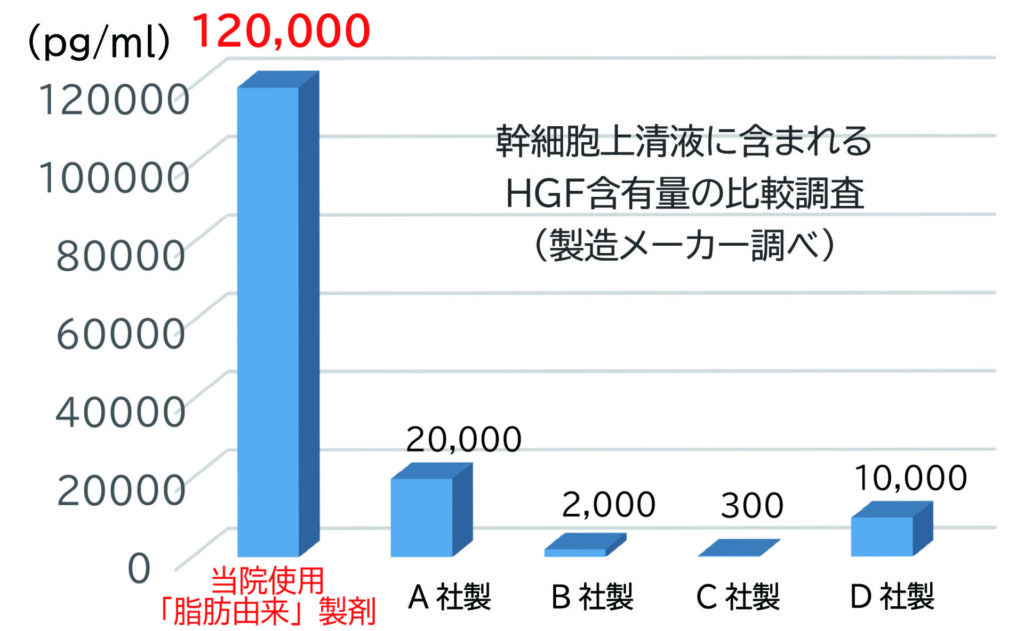
Under strict quality control, the conditioned media we select are manufactured entirely within Japanese university research laboratories or Class 100 CPC (Cell Processing Center) facilities, undergo thorough purification of impurities, and have their safety confirmed through virus testing, sterility testing, and other methods. - Using Conditioned Media High in the Growth Factor HGF
The [adipose-derived] conditioned media uses a special concentration technology to achieve the highest HGF content among human stem cell conditioned media (exosome-containing solutions). HGF is one of the most important growth factors among cytokines, with combined effects including tissue repair/regeneration (particularly in the liver, kidneys, and lungs), anti-inflammatory action, anti-fibrotic action (suppressing TGF-β), and neuroprotective action, contributing to comprehensive effects across organ repair, blood vessels, tissue regeneration, and improved skin/hair quality.
- Combining IV Infusion and Nasal Spray for Cognitive Improvement
For cognitive improvement, combining [adipose-derived] IV infusion with [nasal spray] of the same adipose-derived origin has been shown to be effective. A clinical study administering conditioned media preparations via nasal spray reported improved dementia scale scores in 18 patients with mild to moderate symptoms.
- A Lineup Tailored to Your Goals
In addition to [adipose-derived], which offers comprehensive effects, [umbilical cord-derived (Wharton’s Jelly)] for anti-aging/beauty and [dental pulp-derived] for nerve regeneration are also available. Please see the comparison below for details. - Also Used in Aesthetic Treatments
Conditioned media options are available for delivering active ingredients into the scalp (hair regrowth treatment HART-F) or skin (Mesona Plus skin treatment) via electroporation.
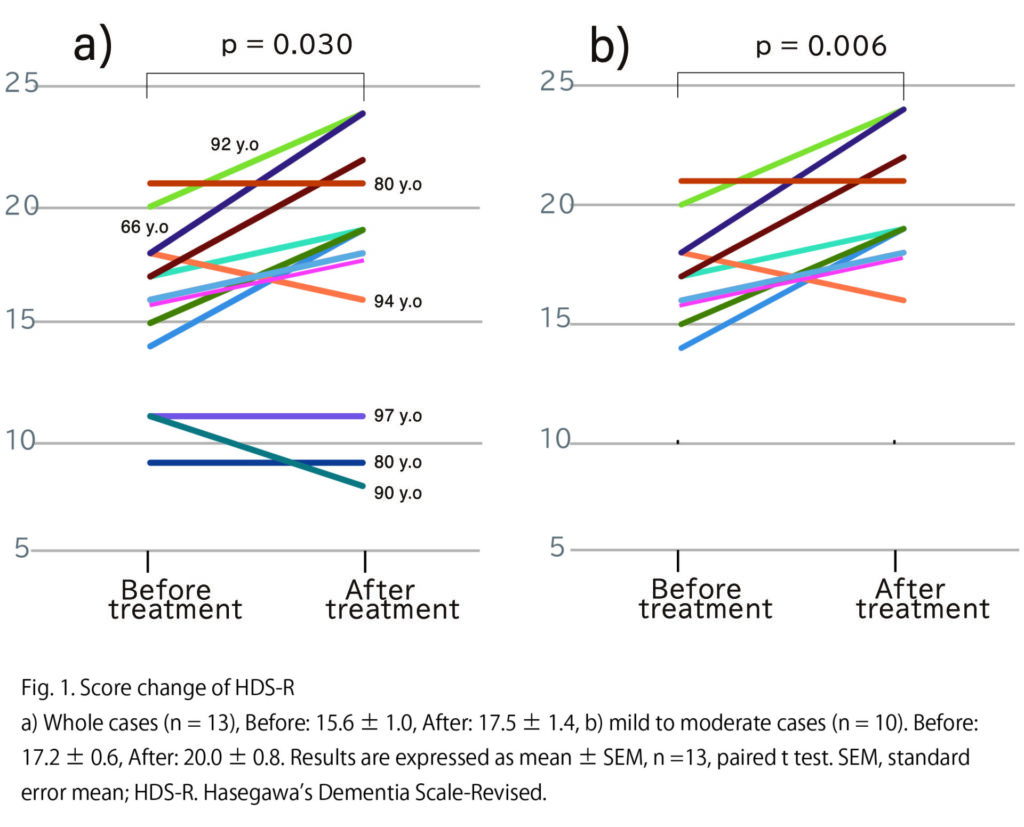
“Safety and Clinical Efficacy of Intranasal Administration of Mesenchymal Stem Cell Secretome for Alzheimer’s Disease and Future Prospects”
Morita Y, Izawa H, Ohga H, Sugie H, Yamamoto T, Hirano A, Nakamura M, Isozaki S, Seino K, Yonei Y. Safety and clinical efficacy on intranasal administration of mesenchymal stem cell-derived secretome in patients with Alzheimer’s disease and its future prospect. Glycative Stress Research. 2024;11(3):103–110. (Figure cited from https://www.toukastress.jp/webj/article/405)Choose From Three Sources – Adipose, Umbilical Cord, and Dental Pulp – According to Your Goals
The “source” of the conditioned media used can be selected according to your treatment goals. Please consult with your doctor during counseling for details. All stem cell conditioned media used at our clinic meet our proprietary standards: “manufactured in a domestic GMP-compliant CPC/university hospital lab,” “donor eligibility screening,” and “quantitative management of component concentration.”
| Source | Characteristics / Expected Goals | Content Comparison |
|---|---|---|
| Adipose-Derived ADIPOSE-DERIVED |
Contains a broad range of cytokines – an all-purpose option. Achieves high-density HGF through proprietary concentration technology. Systemic anti-inflammatory/repair support, promotion of angiogenesis |
 |
| Umbilical Cord-Derived (Wharton’s Jelly) WHARTON’S JELLY |
Extracted from “young cells,” rich in exosome content. Anti-aging care Skin condition/quality improvement |
 |
| Dental Pulp-Derived DENTAL PULP-DERIVED |
A cytokine profile specialized for nerve regeneration. High β-NGF content. Chronic pain, nerve disorders |
 |
Safety and Quality Control
| 01 Manufactured in a Domestic GMP-Compliant CPC/University Hospital Lab | Manufactured at a domestic cell processing facility (CPC / university hospital research lab environment) in accordance with the Ministry of Health, Labour and Welfare’s standards for biological raw materials. Absence of bacteria, viruses, and fungi is confirmed for each lot. |
|---|---|
| 02 Donor Eligibility Screening | Only donor cells that have passed an eligibility review including infectious disease testing (hepatitis B, hepatitis C, HIV, syphilis, etc.) are used. Donor information is recorded and managed. |
| 03 Quantitative Management of Component Concentration | The cytokine and growth factor content of each lot is quantitatively measured by ELISA. Only products with confirmed stable component quality are used. |
Important Notice
The stem cell conditioned media used in this treatment is an unapproved product that has not received approval under Japan’s Act on Pharmaceuticals and Medical Devices. No approved drug with the same components and efficacy currently exists in Japan. This treatment is carried out at the discretion of our physicians, with full informed consent obtained from patients. In the rare event of a serious adverse reaction, coverage under the Relief System for Adverse Drug Reactions may not apply. Please be sure to consult with a physician regarding the details and risks of treatment. Products used have been confirmed to meet requirements through sterility testing, mycoplasma testing, endotoxin testing, virus testing, and other safety tests conducted by the manufacturer.
Reagent Specifications and Safety Test Results [Adipose-Derived]
Overview
Product name: Human Adipose Stem Cell Conditioned Media Extract (Freeze-dried)
Classification: Research reagent
Origin: This product is a freeze-dried solution obtained by purifying and concentrating the culture medium of cultured human adipose-derived stem cells
Country of origin: Japan
| Preparation Site (Manufacturing Site) | CPC attached to a university hospital (GMP-compliant) |
|---|---|
| Product Contents | Undiluted solution |
| Country of Manufacture | Japan |
| Donor | Japanese |
| Donor Screening (Infectious Disease) | 7 items |
| Number of Donor Blood Tests | 1 |
| Virus Testing (Finished Product) | Tested |
| Mycoplasma Testing | Negative |
| Sterility Testing | Negative |
| Endotoxin Testing | Less than 0.015 EU/ml |
| Product Control | Per lot |
| Exosome Measurement | – |
Analysis Items
Appearance: White powder; transparent to pale yellow, odorless liquid (when dissolved)
TBU: 120 TBU or higher <ELISA method>
NH3: Less than 10 µg/dl (when dissolved in 2ml) <indicator method>
pH: 7.4 ± 0.3 (when dissolved in 2ml) <glass electrode method>
Heavy metals: Not detected <sodium sulfide colorimetric method>
Arsenic: Not detected <atomic absorption spectrophotometry>
Storage conditions: Store refrigerated (2-6°C) in a sealed container, avoiding direct sunlight
Shelf life: 3 years after manufacture (once opened, use promptly to avoid microbial contamination)
Allergens: None
GMO: Not applicable
Animal-derived components: None
Safety Test Results
1. Bacterial Testing
– Sterility test <detection by SCDLP agar plate and GPLP agar plate methods> Negative: Passed
– Mycoplasma test <detection by NAT method> Negative: Passed
– Endotoxin test <measurement by gelation method> Less than 0.015 EU/ml: Passed
2. Skin Primary Irritation Test <LabCyte EPI-MODEL24 SIT test method using a 3D cultured intradermal model>
Overview: Cell viability of the test substance was shown. Because the cell viability of the test substance (measured value: 101.1 ± 1.1%) was higher than 50%, the skin primary irritation of the test substance, “10% solution of human adipose stem cell conditioned media purified extract (freeze-dried),” was classified as “not applicable” (i.e., a substance that can be considered non-irritating to the skin).
3. Toxicity Testing (Mouse Oral Administration)
No toxicity was observed in a single-dose oral toxicity test in mice (up to 2000 mg/kg).
Overview: 5 male and 5 female mice were each given a single oral dose of 2000 mg/kg of the human adipose stem cell conditioned media purified extract (freeze-dried) sample (dissolved in distilled water), observed for 14 days from Day 1 (day of administration), and necropsied on Day 15.
Virus Testing
1) Adipose Stem Cell Donor Testing
– Hepatitis B Virus (HBV) <HBs antigen, HBc antibody detected by CLIA method> Negative: Passed
– Hepatitis C Virus (HCV) <HCV antibody II detected by CLIA method> Negative: Passed
– Human Immunodeficiency Virus (HIV) <HIV antigen/antibody detected by CLIA method> Negative: Passed
– Human T-cell Leukemia Virus (HTLV) <HTLV-1 antibody detected by CLEIA method> Negative: Passed
– Human Parvovirus B19 (PVB-19) <PVB19-DNA identified by PCR method> Negative: Passed
2) Product Testing
– Hepatitis B Virus (HBV) antigen <HBs antigen detected by CLIA method> Negative: Passed (less than 0.005 IU/ml)
– Hepatitis B Virus (HBV) antibody <HBs antibody detected by CLIA method> Negative: Passed (less than 0.1 COI)
– Hepatitis C Virus (HCV) antibody <HCV antibody II detected by CLIA method> Negative: Passed (less than 0.1 COI)
– Human Immunodeficiency Virus (HIV) antigen <HIV antigen detected by CLIA method> Negative: Passed
– Human Immunodeficiency Virus (HIV) antibody <HIV antibody detected by CLIA method> Negative: Passed
– Human T-cell Leukemia Virus (HTLV) antibody <HTLV-I antibody detected by CLIA method> Negative: Passed
– Human Parvovirus B19 (PVB-19) <PVB19-DNA identified by PCR method> Negative: Passed
Source: Manufacturer’s report
Who This Is For
- Those who tire easily or feel their age catching up with them (a general sense of decline, physically and mentally)
- Those who feel unwell or lack vitality
- Those who want to feel more youthful
- Those whose hair lacks volume, with a noticeable scalp
- Those experiencing significant hair loss
- Those with dullness, wrinkles, spots, or melasma
- Those whose skin has lost firmness and radiance
Treatment Flow (IV Infusion / Injection)
- Counseling The physician will check your symptoms and concerns during counseling and determine the method and dosage of administration.
- Administration (IV infusion / injection) An injection takes about 5 minutes; an IV infusion takes about 30-60 minutes.
Treatment Frequency and Duration
IV infusions are generally administered once every 1 to 4 weeks. Some patients notice an effect after a single treatment, but many report gradually experiencing more effect with repeated treatments. Local injections are administered into localized areas such as joints to help manage chronic pain.*Optional administration via HART-F (scalp introduction) or Mesona Plus (skin introduction) has its own treatment frequency and duration described on each respective treatment page.
Side Effects / Risks
Bruising or mild pain may occur at the injection/infusion site.*Optional administration via HART-F (scalp introduction) or Mesona Plus (skin introduction) has its own side effects/risks described on each respective treatment page.
Combining With Aesthetic Treatments
Example “Dual Approach” Menus for Synergistic Effects
We also offer a “Dual Approach” that combines tissue regeneration from the inside (Inner: conditioned media IV infusion) with aesthetic treatments from the outside (Outer: Photofacial, HIFU, etc.). This menu is especially recommended for those who feel their skin’s “recovery power has declined.”
[Mechanism of Synergistic Effect]
① The Photofacial/HIFU treatment causes a moderate degree of damage to the tissue →
② The body’s natural healing response (wound healing, action of inflammatory cells/macrophages) occurs →
③ Growth factors in the conditioned media (HGF, VEGF, etc.) activate the healing response →
④ As repair progresses optimally, collagen and elastin production and blood flow increase, which is expected to lead to firmer, more elastic, more radiant skin.
| Menu | Purpose | Details | Treatment + 1V Conditioned Media Price (tax incl.) |
|---|---|---|---|
| HIFU + IV Infusion (1-5V) | Lifting | HIFU ultrasound irradiation tightens the deep layers of the skin, while the conditioned media (IV infusion) supports collagen production and tissue regeneration. | ¥198,000-¥242,000 |
| Photofacial + IV Infusion (1-5V) | Tone-Up | Photofacial improves spots, freckles, melasma, and redness with light. The IV infusion helps improve skin quality from within the body. | ¥56,760-¥100,760 |
Example “Effect Boost” Menus
Introduce or inject conditioned media, which supports cell regeneration, at the same time as active ingredients to boost the effect.
| Menu | Purpose | Details | Treatment + 1V Conditioned Media Price (tax incl.) |
|---|---|---|---|
| Mesona Plus + Introduction or IV Infusion (1-5V) | Skin Quality Improvement | Add conditioned media to Mesona Plus, which introduces active ingredients deep into the skin, to boost skin-quality-improving effects. | ¥55,000-¥99,000 |
| HART-F + Introduction or IV Infusion (1-5V) | Hair Regrowth | HART-F introduces active hair regrowth ingredients deep into the scalp. Growth factors in the conditioned media act on dormant hair follicles. | ¥176,000-¥220,000 |
| Hyaluronic Acid (Volite) + Injection (1-5V) | Wrinkle Improvement | A special menu combining Volite – suited to improving fine, shallow wrinkles caused by dryness with minimal irregularity risk – with conditioned media, aiming to enhance the overall effect. | ¥143,000-¥187,000 |
FAQ
What is stem cell conditioned media therapy?
This is a treatment that administers a purified preparation of conditioned media – the culture medium obtained during the culturing of stem cells, containing substances such as cytokines and exosomes – rather than the stem cells themselves.
What sources (types) are available?
We offer three types: adipose-derived, umbilical cord-derived (Wharton’s Jelly), and dental pulp-derived. Adipose-derived is chosen for systemic anti-inflammatory/repair support and promotion of angiogenesis; umbilical cord-derived for anti-aging care and skin condition/quality improvement; and dental pulp-derived for those seeking help with chronic pain or nerve disorders.
What is the administration method and how long does it take?
Administered via IV infusion or local injection. An injection takes about 5 minutes; an IV infusion takes about 30-60 minutes.
How often is treatment needed?
IV infusions are generally given once every 1 to 4 weeks. Local injections are administered into localized areas such as joints to help manage chronic pain.
Are there any side effects or risks?
Bruising or mild pain may occur at the injection/infusion site. In addition, the stem cell conditioned media used in this treatment is an unapproved product that has not received approval under Japan’s Act on Pharmaceuticals and Medical Devices, and in the rare event of a serious adverse reaction, coverage under the Relief System for Adverse Drug Reactions may not apply.
Can this be combined with aesthetic treatments?
Yes. In addition to the “Dual Approach,” which combines aesthetic treatments such as Photofacial or HIFU (Outer) with conditioned media IV infusion (Inner), we also offer menus that combine introduction/injection via Mesona Plus, HART-F, or hyaluronic acid (Volite) with conditioned media to boost the effect.
Price List
Stem Cell Conditioned Media (Exosome-Containing Solution) Treatment Fees
Warning: include(/home/togotodeli/dclinicforum.com/public_html/wp-content/themes/wazawaza-design/price/ヒト幹細胞培養上清液_en.php): Failed to open stream: No such file or directory in /home/togotodeli/dclinicforum.com/public_html/wp-content/themes/wazawaza-design/functions.php on line 248
Warning: include(): Failed opening '/home/togotodeli/dclinicforum.com/public_html/wp-content/themes/wazawaza-design/price/ヒト幹細胞培養上清液_en.php' for inclusion (include_path='/home/togotodeli/dclinicforum.com/public_html/wp-content/plugins/backwpup/vendor/pear/archive_tar:/home/togotodeli/dclinicforum.com/public_html/wp-content/plugins/backwpup/vendor/pear/console_getopt:/home/togotodeli/dclinicforum.com/public_html/wp-content/plugins/backwpup/vendor/pear/pear-core-minimal/src:/home/togotodeli/dclinicforum.com/public_html/wp-content/plugins/backwpup/vendor/pear/pear_exception:.:/opt/php-8.3.33/data/pear') in /home/togotodeli/dclinicforum.com/public_html/wp-content/themes/wazawaza-design/functions.php on line 248